
INTRODUCTION
This stage will investigate the synthesis and integration of form, structure, and space by means of designing a Temple/BM at Sahara Desert. We can designate the Temple and BM statue as pavilions. Pavilions, as the small scale applications of architecture, have an important place in the history of architecture in the form of public structures. These public structures have a different architecture that do not conform to conventional building typologies but can be seen as an architectural challenge due to their temporariness. Throughout history, these structures employ contemporary technologies and are often of architectural significance in spite of their sometimes diminutive size.
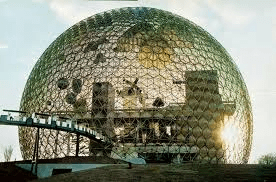
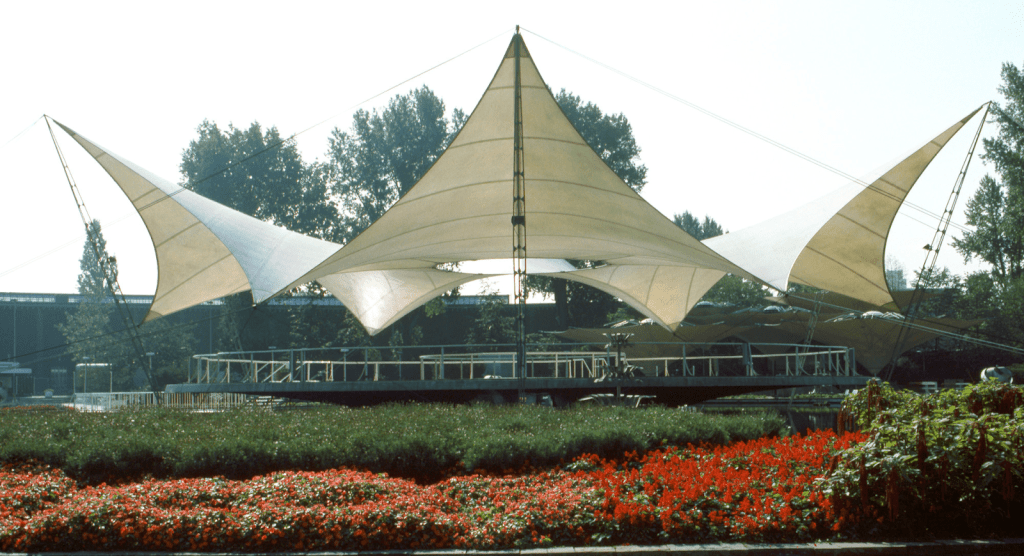
The German Pavilion, designed by Mies van der Rohe for the 1929 Barcelona World Exhibition, is considered as one of the most important examples of the international style. Against the tendency to reduce geometry to logical and formal axioms, Richard Buckminster “Bucky” Fuller (1895 -1983), an American architect, designer and inventor, also challenged conventional Cartesian geometry, in favour of different conceptions such as folding as “a way of thinking”, “folding as a form of action and operation”, and “folding by action”. Fuller placed movement at the center as a means of triggering thought.
Frei Otto, an engineer and architect, was a world-renowned innovator who pioneered high tech fabric canopy systems with tensile structures and has also worked with other structural and building systems using grid shells, bamboo, and wooden framework. He made impressive discoveries in pneumatic theory, using air as a structural element, and the development of convertible roofs.
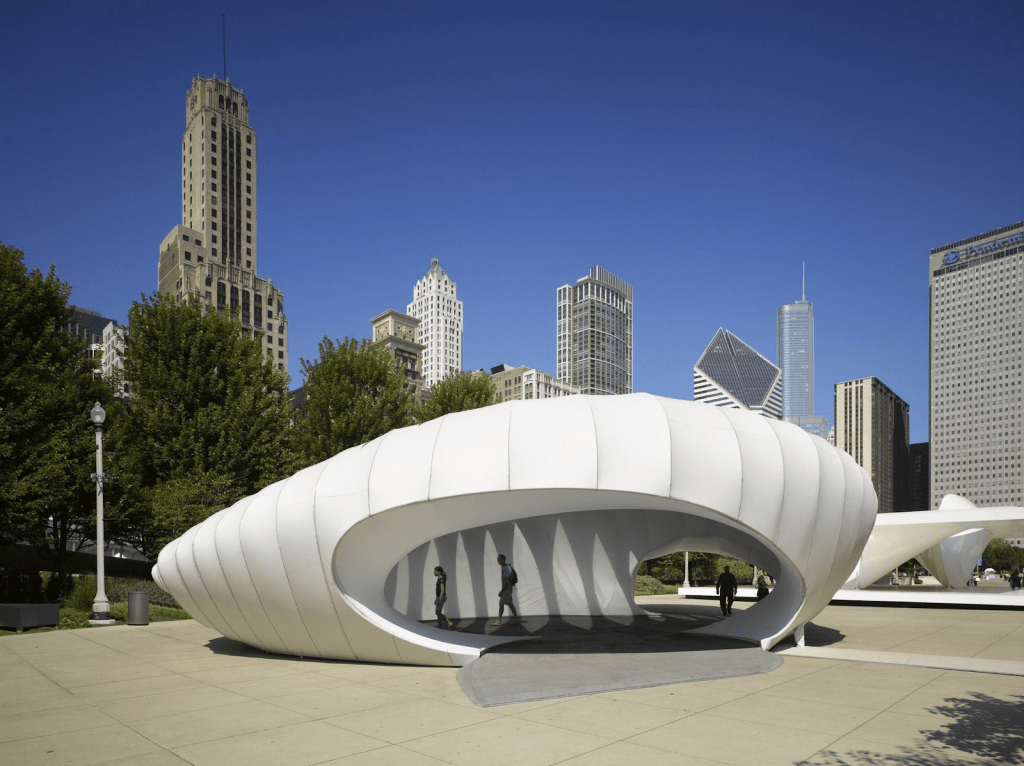
Zaha Hadid Architects´s pavilion merges new formal concepts with the memory of the American architect and urbanist Burnham’s bold, historic urban planning. Two pavilions by UN Studio and Zaha Hadid have been temporarily installed at the Millenium Park, Chicago.
DESCRIPTION
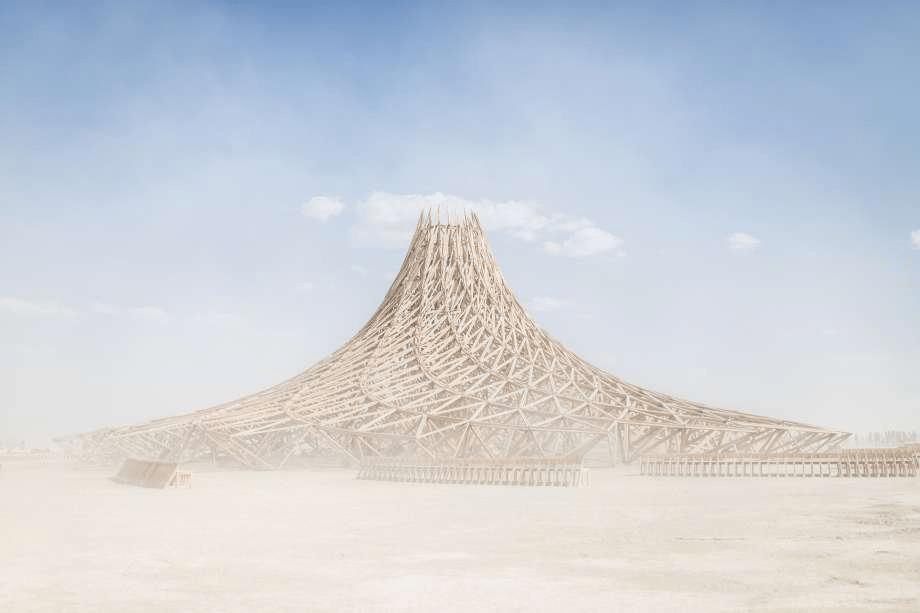
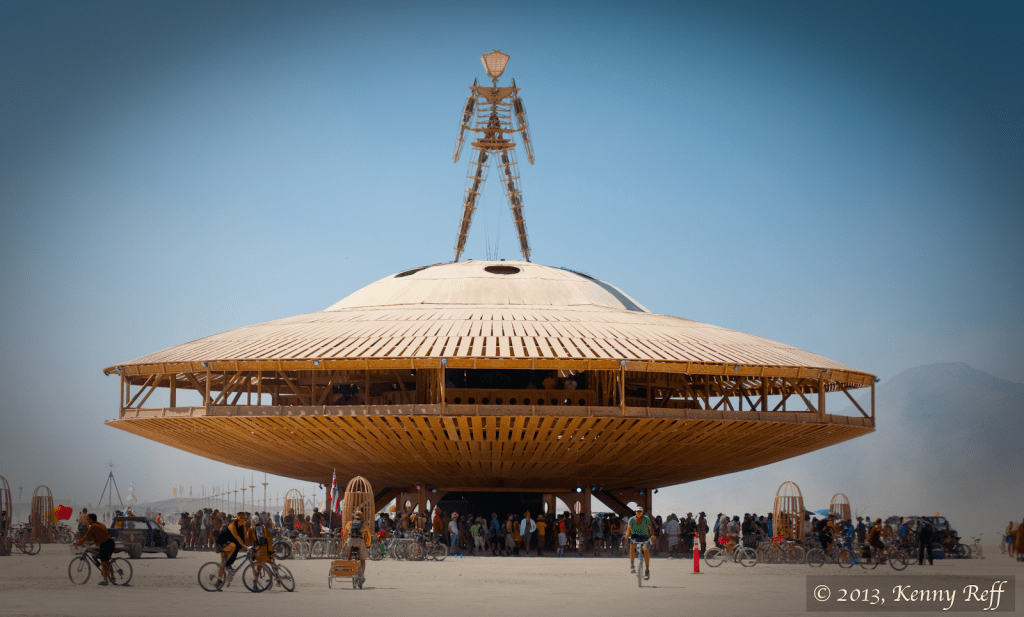
You are asked to design a Temple/BM structure as a symbolic iconic structure demonstrating the main principles of BM and a common gathering space with a circulation path as entrance and exit. The structure should have a monumental appearance, create shade and give some protection from the elements. This temporary structure should be easily erected and should be modular to allow growth. It should be demountable so that it leaves no trace. The temporary nature of this structure should take its cue from the environment, as everything in nature disappears and/or dissolves over time.
Throughout history, humankind has constructed buildings to meet the need for shelter. As time passed, these needs were diversified, and thanks to technological developments, structures of different scales and needs have been built. Structure has always been an integral part of the design. Buildings were made by considering both structure and materials. Your structure should also have the ability to connect to the playa’s substructure as electricity power lighting circuits etc…
All these components constitute the tectonic quality of the building, but also reveal the value of that structure. Structure is a powerful tool and a common language of architects to express themselves.
OBJECTIVES
- To explore the relationship between structural systems, materials and environment
- To explore the relationship between the old and new interpretations of a pavilion
- To further develop presentation skills including both sketching by hand and using digital tools
SUBMISSION
- Model at 1/20 scale showing the whole structure
- Joint Detail at 1/1 Scale
- Digital model to be uploaded to Sketchfab & webpage under the “Stage III – Student Works” subpage.
 MISSION BURNING MAN 2020